
Beginner's guide to finding galaxies and nebulae
Your first look at a galaxy millions of light-years away is unforgettable. It also takes some skill. Here's how to get there.
1. Pick the right night
Moonlight hides faint objects. Observe in the week around New Moon, and get as far from city lights as you can. From Orange County, the deserts to the east are much darker than the coast.
2. Let your eyes adapt
Your eyes need 20 to 30 minutes in the dark to reach full sensitivity, and one glance at a white phone screen resets them. Use red light only. MessierGenius has a red night mode for this.
3. Start with the showpieces
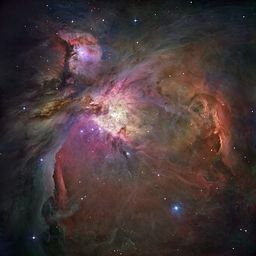
- M42, the Orion Nebula (winter): visible to the naked eye as the fuzzy middle "star" in Orion's sword.
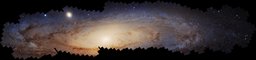
- M31, the Andromeda Galaxy (autumn): a long oval glow, visible to the naked eye under dark skies.
- M13, the Hercules Cluster (summer): a globular cluster of hundreds of thousands of stars.
- M8, the Lagoon Nebula (summer): low in Sagittarius, bright and large.
4. Find it: star-hop or GoTo
Star-hopping means using bright stars as signposts and moving step by step to the target with your finder. GoTo telescopes like the Celestron NexStar SE and NexStar Evolution point there for you after a quick alignment. MessierGenius FIND mode does something similar on your phone: follow the arrows until the target turns green.
5. Use low power first
Start with your longest focal length eyepiece, which gives the widest view. Once the object is centered, try more magnification.
6. Use averted vision
Look slightly to the side of the object and it will seem to brighten. Gently tapping the tube can also help your eye pick up a faint glow.
7. Keep a log
Sketch or note what you see. MessierGenius logs each object you find and gives you a fun-fact card, a quick way to learn all 110.