The best telescope for Messier objects
Messier objects range from naked-eye clusters like the Pleiades to faint galaxies around magnitude 10. Two things matter most: aperture (how much light the telescope gathers) and how easily you can find things.
Aperture: what you'll see
- 4–5 inch: every Messier object is reachable under dark skies. Clusters look great; galaxies look like soft glows.
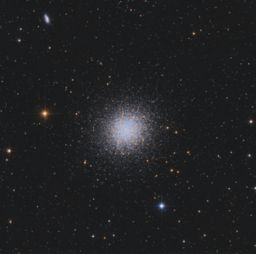
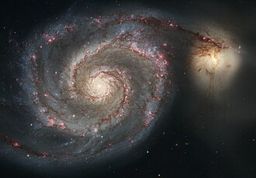
- 6–8 inch: the sweet spot. Globular clusters like M13 begin to resolve into stars, and you can make out the dust lane in the Sombrero Galaxy (M104) and the spiral shape of M51.
- 9.25–11 inch: galaxy detail and much more from suburban skies.
Our picks
Celestron NexStar SE (4SE–8SE)
Compact Schmidt-Cassegrain on a one-arm GoTo mount with a database of 40,000+ objects. The 6SE and 8SE are classic Messier scopes that are easy to carry and quick to set up.
Celestron NexStar Evolution (6", 8", 9.25")
Built-in rechargeable battery and Wi-Fi control from your phone, so there's no hand-controller cord or power tank. A great choice for an all-night Messier Marathon.
Not sure? Ask us.
Orange County Telescope is an authorized Celestron dealer in Santa Ana, CA. Call 888-471-9991 or visit octelescope.com.
Accessories that help
- A low-power, wide-field eyepiece for clusters and big objects like M31 and M42.
- A red flashlight and a printed chart.
- A dew shield and a portable power supply, if your scope doesn't have a built-in battery.
- The free MessierGenius app to check what's up and log what you find.